

At Wavelogix®, we believe concrete testing is overdue for a technology revolution. In a recent...
Why Device Orientation Matters: Understanding Signal Strength in Wavelogix Dataloggers
When customers ask what affects the performance of their Wavelogix datalogger, our answer often starts with a simple principle:
How you position the device can make a measurable difference in signal quality and data reliability.
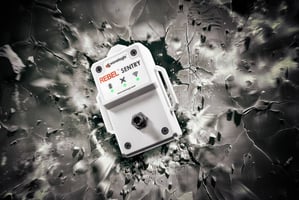
While the sensor inside the concrete does the heavy lifting, the datalogger above ground is responsible for delivering real-time strength data to the cloud. And because it communicates through LTE-M cellular networks, antenna orientation plays a meaningful role in how efficiently that data gets transmitted.
Below, we break down the science in practical terms—based on the most common questions our support team receives.
1. Why does the orientation of my Wavelogix datalogger matter?
Cell towers transmit radio signals with a specific polarization—usually vertical. When your datalogger stands upright, its antenna is vertically aligned and can capture the strongest possible signal.
Lay it flat, and the antenna becomes horizontally polarized. That’s where signal loss begins.
2. What happens if my device is lying flat?
A flat device creates what’s known as a polarization mismatch—a 90° misalignment between tower and device. This mismatch can reduce received signal strength by 10–20 dB, enough to cause slower transmissions or intermittent dropouts in weaker coverage areas.
Your datalogger will still attempt to send data, but the connection won’t be as robust.
3. What is the recommended device orientation?
The ideal setup is simple:
▶ Stand the datalogger upright
▶ Keep the sensor connector parallel to the ground
▶ Ensure it is not lying flat or tilted sharply sideways
This vertical position maximizes alignment with cellular tower signals and keeps data flowing efficiently.
4. Why do cell towers use vertical polarization?
Most carriers rely on vertical polarization because:
- Mobile devices are usually held upright
- Vertical signals travel efficiently over long distances
- They are less affected by reflections from buildings, trucks, and terrain
- They maintain better performance in mixed environments (urban, suburban, rural)
In other words, towers are built for how people—and devices—naturally hold and mount equipment.
5. What does “polarization mismatch” mean?
Polarization describes the direction of the radio wave’s electric field.
When a device’s antenna orientation doesn’t match the tower’s, they can’t exchange the full available signal. Engineers often model this mismatch using the equation:
Received power ∝ cos²(θ)
Where θ is the angle between device and tower polarization.
At 0°, you get maximum signal.
At 90°, the theoretical signal approaches zero.
In real environments, reflections help—so the signal rarely drops to nothing—but performance is noticeably reduced.
6. Why is signal stronger in some areas than others?
Many modern LTE towers, especially in urban and suburban areas, now use cross-polarized antennas (±45° slant).
This improves performance for MIMO (Multiple Input Multiple Output) systems, which are now standard in LTE and LTE-M networks.
Rural areas, however, often continue using simple vertical polarization.
The key takeaway:
No matter the tower type, vertical device orientation performs best on average.
7. How does this affect LTE-M or Cat-M1 devices like Wavelogix’s dataloggers?
Wavelogix dataloggers use LTE-M technology, which piggybacks on existing LTE infrastructure.
- On cross-polarized towers, vertical orientation ensures even coupling to both polarizations.
- On vertical towers, vertical orientation provides ideal alignment.
Either way, standing the device upright results in the most reliable connection.
8. Can I mount the datalogger in a different position if necessary?
Yes—if site constraints require it.
But here’s what to expect:
- Slight tilt → Minor signal reduction
- Fully horizontal → Noticeable reduction
- Obstructions (steel, trucks, machinery) → Additional losses
Environmental reflections may help, but for best results, avoid laying the datalogger flat unless absolutely necessary.
9. Will future Wavelogix devices be less sensitive to orientation?
We are continuously improving antenna design, exploring orientation diversity, and evaluating options that reduce directional sensitivity.
That said, radio physics doesn’t change: Even with enhanced design, vertical orientation will always provide the strongest and most consistent signal.
Future enhancements aim to make the system more forgiving—not to replace best practices.
Final Thoughts: Small Adjustments, Big Reliability Gains
In the field, concrete placements can be busy, unpredictable environments. Even so, a simple habit—standing your datalogger upright—can significantly improve data reliability.
At Wavelogix, every part of our system is engineered to provide accurate, timely, real-time concrete strength data. Proper device orientation is one of the easiest ways to ensure optimal performance.
If you ever have questions about mounting, signal strength, or site-specific conditions, visit our FAQ page or contact our team. We’re always here to help.
Contact Our Team