
Concrete testing costs more than most teams budget for. Cylinder break tests typically run $300 -...
A Conversation with Ryan Hornsey, Safety Director at Altounian Construction: WaveLogix Lunch & Learn Webinar Recap
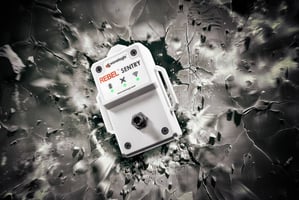
When a seasoned safety professional with 17-plus years in construction tells you a product is a “game changer,” you pay attention. That’s exactly what Ryan Hornsey, Safety Director at Altounian Construction, had to say about the WaveLogix REBEL Concrete Strength Sensing System during a recent Lunch & Learn webinar hosted by WaveLogix CEO Joe Turek and Marketing Director Suzanne Florek.
Ryan didn’t mince words: he’s a fan. From the moment Altounian deployed their first REBEL sensor, the technology transformed how his team approaches concrete pours, safety decisions, and project scheduling. Here’s what we learned.
Building a Legacy: Who Is Altounian Construction?
 Based in Lake Bluff, Illinois, Altounian Construction has been building its reputation since 1958. Now in its third generation of family leadership, the firm blends old-world craftsmanship with modern construction expertise. With more than 80 skilled tradespeople, Altounian self-performs much of its work—from carpentry to concrete foundations and floors—across residential and small commercial projects.
As Safety Director, Ryan’s mission is straightforward but critical: make sure everyone goes home the way they came in. That commitment to safety is exactly what led Altounian to the REBEL sensor.
The Old Way: Cylinder Breaks and Blind Spots
Before REBEL, Altounian relied on the industry-standard approach: pulling four to six cylinders per pour and sending them to a third-party lab for breaking at 1, 3, 7, 14, and 28-day intervals. The process was slow, expensive, and riddled with uncertainty.
“You’re waiting for that first break, that second break,” Ryan explained. “And if those cylinders aren’t stored properly or maintained properly, you might lose some of that quality aspect as well.”
The cost? Roughly $1,000 per pour for third-party cylinder testing. The risk? Results that might not reflect the actual in-place strength of the concrete—and delays that could hold up the entire project.
Enter REBEL: A Believer from Day One
Interestingly, it was Altounian’s own third-party concrete tester who first introduced them to the REBEL system—recognizing the cost impact and limitations of traditional testing. Ryan and his team put it through the wringer on their very first project, deploying 26 sensors across footings, walls, slab-on-grade, and elevated slab-on-deck pours.
When Suzanne asked Ryan at what point he became a believer, his answer was immediate:
“Really after our first project. We went through the gamut with it—footings, walls, slab on grade, slab on deck. We put this through the test. Twenty-six sensors in total, and the only issues we ever had were from our own learning curve.”
That first project was all it took. Altounian has since completely eliminated cylinder breaks on projects where they deploy REBEL sensors. The REBEL data is now part of their contractual deliverables—clients accept the sensor reports as official concrete strength documentation.
What Makes Ryan a Fan: The Benefits That Matter
Real-Time Visibility, Right from His Phone
Ryan doesn’t just check the REBEL dashboard occasionally—it’s become part of his morning routine. “Every morning, that’s usually the first thing I’m doing,” he said. Whether he’s in the office or on a job site with his iPad, he has live access to strength and temperature data across every active pour.
Safer Shoring Decisions
For elevated slabs, knowing when it’s safe to remove or reduce shoring is a high-stakes decision. Remove it too early, and workers are at risk. Wait too long, and you’re burning time and money. REBEL gives Ryan the real-time data to make that call with confidence—no guesswork, no waiting for lab results.
Cold Weather Confidence
Chicago winters don’t pause for concrete pours. During a recent cold spell, Ryan and his colleague Brad were monitoring the REBEL app from their phones—watching both ambient and internal concrete temperatures in real time. Their target: 1,000 PSI before the freeze could compromise the pour. “Being able to see that continuously going up and surpass that,” Ryan said, “it just allows us to guarantee a better product.”
Significant Cost Savings
The math is compelling. Third-party cylinder testing ran Altounian about $1,000 per pour. A REBEL sensor costs roughly $200, and the reusable data loggers last across multiple projects. The savings add up fast—especially for a firm that pours concrete across every project.
Faster Schedules
With real-time data instead of waiting for scheduled lab breaks, Altounian can move to the next phase of construction as soon as the concrete is ready—not when the testing schedule says it might be. Ryan noted that REBEL notifications even arrive on weekends: “Seeing those come through on a Sunday—I know Monday we can hit the ground running.”
In the Field: How Altounian Deploys REBEL
Ryan has taken personal ownership of the REBEL deployment process. Because Altounian uses the sensors as their primary concrete testing method, he insists on precision: he coordinates pour schedules, installs the sensors himself, connects the data loggers, and verifies the readings before walking away.
For most pours, Altounian uses two sensors for redundancy and richer data. For larger elevated decks, they’ll use three—one on each end and one in the center. Ryan noted that the paired sensors consistently track together, confirming the accuracy of the data: “They follow the trend line really close together. The data is definitely pretty accurate.”
Data loggers stay connected until the concrete hits the target strength—typically around 9 to 10 days—and are then recharged and reconnected closer to the 28-day mark for final verification.
Lessons Learned and a Partnership That Delivers
No new technology comes without a learning curve. Ryan’s team discovered early on that data loggers left near active pours can take a beating from concrete splatter. Their solution? A trip to Home Depot for waterproof containers with drilled cable holes—a creative DIY fix. (WaveLogix, listening as always, shared that protective boots and purpose-built ammo-style cases are in development.)
When a few data loggers did get damaged on that first project, Ryan praised WaveLogix’s customer service: “You guys have been great to work with. Those are things that you guys have jumped in, no problem, and been able to take care of us really well.”
Looking Ahead
The webinar also previewed exciting enhancements coming to the REBEL platform: integrated weather data and evaporation rate monitoring on the dashboard, strength deviation alerts, predictive 28-day strength modeling after just 3 days of data, and customizable PDF reporting with company branding. For a team like Altounian that’s already all-in on the technology, these upgrades promise to make an already indispensable tool even more powerful.
Ryan’s Recommendation
When asked what he’d tell other contractors, Ryan didn’t hesitate:
“This product itself has been a game changer for us. It’s really allowed us to have a better idea, a better perspective. I would definitely recommend any contractor doing any type of foundation or flat work to really look at this. It’s been a whole change in how we look at things.”
Ryan recently put sensors on a project where Altounian had subbed out the concrete work—and loved watching the subcontractor’s reaction when they saw the live data for the first time. That moment of amazement? It’s one Ryan now gets to experience every morning when he opens the REBEL dashboard.
Ready to see what REBEL can do for your projects? Contact us at sales@wavelogix.tech to explore a pilot program. And if you have a project in Northern Illinois, reach out to Altounian Construction.