

Concrete strength is not the result of a single ingredient or adjustment. It’s the outcome of...
Few issues disrupt a concrete project quicker than low-strength concrete, particularly when the problem appears in the form of failed cylinder breaks days or weeks after placement. By that point, construction decisions have often already been made, crews have moved on, and corrective actions become expensive and disruptive.
Most concrete strength failures, however, are preventable. Even when risk factors exist, early detection and disciplined investigation can protect both schedule and quality. This article explains why concrete may not reach design strength, how to diagnose the root cause when low results occur, and how improved field controls—including early performance monitoring—can reduce the risk of costly surprises.

What Is Considered Low-Strength Concrete?
Low-strength concrete typically refers to concrete that doesn’t meet the specified compressive strength (often f’c) at the required age (commonly 28 days) or fails to achieve an earlier strength milestone needed for construction operations such as:
- Formwork removal
- Post-tensioning
- Opening pavements to traffic
Low cylinder break results can be caused by either actual in-place strength deficiency, or else errors in sampling, curing, transport, or laboratory testing. For this reason, a failed break should trigger a structured investigation rather than an immediate assumption of structural deficiency.
Common Causes of Low-Strength Concrete
Low strength concrete is rarely caused by a single issue. In most cases, it’s the result of small breakdowns across mix design, materials, or field execution.
Excess Water (High Water–Cement Ratio)
Excess water is the most common cause of concrete strength problems, such as:
- Increasing capillary porosity
- Reducing compressive strength and durability
- Increasing variability between loads
Common sources include unapproved water additions to improve slump, aggregate moisture not properly accounted for, or inconsistent batching corrections.
Mix Design or Material Changes
Even small changes can significantly affect strength development, including
- Cement source or chemistry changes
- Adjustments in SCM type or percentage
- Admixture substitutions or dosage drift
- Aggregate gradation changes or contamination
When field concrete deviates from the assumptions underlying the approved mix design, expected strength development may no longer apply.
Poor Curing Conditions
Concrete strength develops through hydration, which requires adequate moisture and temperature control.
- Early drying can permanently reduce strength
- Cold placements slow early-age strength gain
- Hot, windy conditions accelerate evaporation and surface drying
Even well-designed mixes can underperform if curing is inadequate.
Placement and Consolidation Issues
Execution in the field can introduce localized strength loss:
- Under-vibration leaves voids and honeycombing
- Over-vibration or excessive slump can cause segregation
- Long haul times or re-tempering may reduce performance
These issues may not always be reflected in cylinders, depending on the sampling location.
Sampling and Testing Errors
A surprisingly large number of low-strength cases originate in the testing chain rather than from the concrete itself.
Common issues include:
- Non-representative sampling
- Improper consolidation of cylinders
- Incorrect initial curing temperature or moisture
- Poor transport conditions
- Improper capping or grinding
- Testing machine calibration errors
Many of these issues are rooted in fundamental mix design and field practices. If you’re looking for a deeper breakdown of how to improve concrete strength from the start, see our guide on How to Make Concrete Stronger.
Investigating Low Cylinder Break Results
When a cylinder break comes in low, the priority is to understand whether the issue reflects actual in-place performance or variability in testing. A structured review helps avoid unnecessary rework or incorrect conclusions. Here are some steps to follow:
Step 1: Confirm the Scope
- Which tests failed (7-day, 28-day, or both)?
- Is the issue isolated or repeated?
- Are there notes related to weather, delays, or added water?
Step 2: Review Batch Records and Field Logs
Examine:
- Total water content (including aggregate moisture)
- Cementitious content and proportions
- Admixture type and dosage
- Slump, air, and temperature at discharge
- Delivery and discharge timing
Step 3: Evaluate Curing Conditions
Document:
- Ambient temperature, wind, and sun exposure
- Curing method and start time
- Insulation or edge protection
- Any freeze or early drying exposure
Step 4: Compare with In-Place Evaluation (If Needed)
Depending on specification as well as risk tolerance
- Additional cylinders or field-cured specimens may provide context
- Maturity data can help explain early-age trends
- Cores offer direct in-place evidence, though they are invasive and are typically taken later in the process
The object here is to determine whether the issue reflects true in-place deficiency or else testing-related variability.
Quick Diagnostic Checklist
If low strength results appear, consider the following questions:
- Was unapproved water added or were moisture corrections inaccurate?
- Did cement, SCMs, or admixture sources or dosages change?
- Was curing delayed, interrupted, or inadequate?
- Were there extreme temperatures or long haul times?
- Was consolidation adequate and segregation avoided?
- Were cylinders properly made, cured, transported, and tested?
Preventing Low-Strength Concrete Before It Becomes an Expensive Problem
Preventing strength issues starts long before a test result comes back. Consistent controls across batching, placement, curing, and verification reduce the risk of costly surprises later. Here’s what we recommend:
Control Water at Every Stage
- Enforce using only approved water additions
- Use admixtures to manage workability
- Track aggregate moisture and batch corrections
- Train crews on the strength impact of excess water
Stabilize Mix Design and Materials
- Treat material changes as real performance changes
- Re-validate strength behavior when cement, SCMs, or admixtures shift
- Maintain consistent QC checks on air, slump, temperature, and unit weight
Improve Curing Discipline
- Begin curing as soon as finishing allows
- Maintain moisture and manage temperature
- Account for wind, sun, and cold exposure
Standardize Sampling and Testing Practices
When cylinders are used for acceptance:
- Use consistent sampling locations and methods
- Ensure proper consolidation and labeling
- Control initial storage and transport
- Verify laboratory procedures and equipment calibration
Detecting Strength Issues Earlier
Strength failures are most costly when they are discovered late—often at 28 days—when corrective options are limited. Earlier visibility into strength development provides more opportunity to respond.
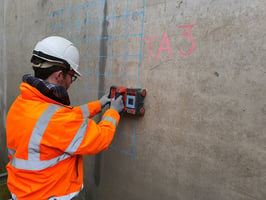
Technologies such as Wavelogix REBEL® sensors provide real-time insight into in-place strength behavior during early-age curing. This allows teams to identify strength gain trends that may be falling behind expectations while corrective actions—such as curing improvements, batching review, or mix adjustments—are still feasible.
By monitoring strength in real time, teams have the ability to be proactive early on, when it’s needed, instead of having to make reactive fixes later. Instead of waiting for lab results, they can confirm that strength is developing as expected, or intervene early if it’s not.
Earlier detection supports better decision-making around form removal, stressing, and opening milestones, while reducing the risk of late-stage surprises.
Frequently Asked Questions
Why is my concrete not reaching strength?
The most common causes include excess water, material changes, inadequate curing, placement issues, or testing errors.
Do failed cylinder breaks mean the structure is weak?
Not necessarily. Cylinder failures can result from sampling or testing issues. A structured investigation is required to determine in-place performance.
What is the fastest way to prevent strength failures?
Control water, stabilize materials, cure properly, and improve early visibility into strength development.
What should be done immediately after a failed break?
Review batch records, field logs, curing conditions, and cylinder handling before escalating to invasive testing.
Can early-age data help prevent late failures?
Yes. Identifying strength trends early means more time to investigate and mitigate issues before schedules and costs are impacted.